
Sustainable agriculture: research, innovation and gender for global food security

JOIN OUR LIVE WEBINAR

Wednesday 18 November at 12:00 (UTC)

About this video

Sustainable agriculture is central to several Sustainable Development Goals, from ending hunger (SDG 2) to climate action (SDG 13) and responsible production (SDG 12), and progress depends on research that crosses disciplines and borders and reflects the needs of both men and women. This webinar brings together researchers working on sustainable agriculture and food security to share how science is helping build food systems that are productive, resilient and equitable for all. We will explore the role of women scientists in advancing this work and how embedding women’s needs into the research design leads to more robust research. 

• The research advancing sustainable agriculture and food security, and how it ties to the SDGs, including gender equality (SDG 5) 

• From lab to field: how this science delivers real-world impact for farmers and their communities. 

• Women scientists leading the way in agriculture and allied fields, from research design to policy 

• International collaboration in action

About the presenters

Akissa Bahri

Tunisian agricultural engineer and professor at the National Agricultural Institute of Tunisia (INAT)

Professor Akissa Bahri is a Tunisian agricultural engineer. She brings extensive experience in water resources management, with particular expertise in the agricultural use of marginal waters, biosolids, and their environmental impacts. Professor Bahri served as Tunisia’s Minister of Agriculture, Water Resources and Fisheries from 2020 to 2021, following her role as Secretary of State for Water Resources and Professor at the National Agricultural Institute of Tunisia. Her international career includes serving as Director for Africa at the International Water Management Institute (IWMI) based in Accra, Ghana (2005–2010), and as Coordinator of the African Water Facility (2010–2015) at the African Development Bank. Earlier, she was Director of Research at Tunisia’s National Research Institute for Agricultural Engineering, Water and Forestry.

Her contributions to science and water management have been widely recognized. She has received honors from the Guinness Foundation (1984), the International Foundation for Science (1993), and the Kuwait Foundation for the Advancement of Sciences (1996). She was awarded the 2009 Prof. C.N.R. Rao Prize for Scientific Research and the International Water Association’s “Women in Water” Award in 2018. In 2005, she was a Fulbright Scholar at the University of California, Davis. Professor Bahri holds an Agricultural Engineering degree from the École Nationale Supérieure d’Agronomie de Toulouse, a Doctor-Engineer degree from the Institute National Polytechnique de Toulouse, and a Ph.D. in Water Resources Engineering from Lund University.

Akissa Bahri

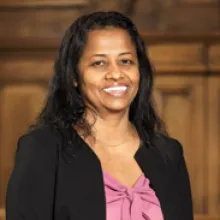
Renuka Nilmini Attanayake

Professor, Department of Plant and Molecular Biology at the University of Kelaniya

Prof. Renuka Nilmini Attanayake is a distinguished Professor in the Department of Plant and Molecular Biology at the University of Kelaniya, Sri Lanka, specializing in plant pathology and crop disease management using advanced molecular biological tools. Inspired by her childhood experiences witnessing the hardships and haphazard chemical applications faced by local farmers, she pursued a career dedicated to boosting agricultural productivity and safeguarding rural livelihoods. After graduating with the highest GPA in her Bachelor of Science honors degree from the University of Kelaniya in 2002, she earned both her Master of Science and Ph.D. in Plant Pathology from Washington State University, USA. This international training equipped her with cutting-edge expertise in pathogen population genetics and molecular biology, which she brought back to Sri Lanka to build a robust foundation for modern plant pathology research.

Throughout her career, Prof. Attanayake has bridged the gap between global laboratory innovation and local farming impact. Her landmark research led to the first identification of the devastating cabbage white mold pathogen (Sclerotinia sclerotiorum) in Sri Lanka, prompting her to spearhead community outreach and introduce ecological solutions like Anaerobic Soil Disinfestation (ASD). Her exceptional contributions have earned her prestigious global recognition, including the 2023 OWSD-Elsevier Foundation Award for Women Scientists in the Developing World and being named one of Asia's top 100 researchers by the Asian Scientist journal in 2024. In addition, she won several travel awards to from the American Phytopathoogical Society. Today, she continues to champion international collaborations, securing significant grants from TWAS and ICGEB, to explore novel frontiers like fungal mediated polyethylene degradation, and pathogen population genetics. 

Renuka

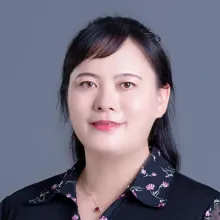
Prof. Zhang Xiaolan

Dean of the College of Horticulture, China Agricultural University 

Dr. Xiaolan Zhang is a professor in the Department of Vegetable Science at China Agricultural University. Research in Zhang lab focuses on understanding molecular mechanisms underlying shoot branching, sex determination and fruit development in cucumber. Using developmental biology and molecular genetics approaches, her work leads to dissection the mechanism of auxin promotes femaleness in cucumber, identification of important genetic components for shoot branching and fruit shape development. The purpose of her research is to develop molecular breeding tools to create new cucumber varieties with ideal shoot architecture and superior fruit quality.


Zhang Xiaolan

Prof. Wang Hongning

Academician of the Chinese Academy of Engineering (CAE), Professor, Sichuan University 

Hongning Wang is a member of the Chinese Academy of Engineering and Chief Scientist for Biology under the Double First-Class Initiative at Sichuan University, where she is a professor and doctoral supervisor. She serves on the Eighth Discipline Appraisal Group for Biology and Bioengineering of the Academic Degrees Committee of the State Council. Her research focuses on frontier interdisciplinary basic and applied research into disease prevention and control in pigs and chickens. She pioneered an integrated framework for the biosecurity-based prevention and control of bacterial diseases in livestock and poultry, combining whole-chain coverage, traceability, and predictive capability. Her research findings have been applied in China’s major pig- and chicken-producing regions, establishing a new paradigm for bacterial disease prevention and control through biosecurity.

Hongning Wang

Ylann Schemm

Elsevier Foundation’s Director

As the Elsevier Foundation’s Director, Ylann Schemm drives inclusive health and research partnerships to support the UN Sustainable Development Goals building research capacity in developing countries and tackling health inequities. She has been an integral part of the Foundation’s growth since joining as a Program Officer in 2008. In addition, Ylann is Elsevier’s Vice President of Corporate Responsibility, building on two decades of corporate relations and responsibility roles which focus on gender, ‘sound science’ and sustainability collaborations. Since 2015, she has served as the Co-Chair of Elsevier’s Gender Equity Taskforce which shapes Elsevier’s contributions to inclusive research from gender balance in editorial boards to sex and gender analysis in Research. From June 2020- June 2022, Ylann also served as the Chair of Research4Life’s Executive Council, a UN-publisher partnership to bridge access gaps for researchers and doctors in developing countries.

Ylann Schemm

Comments